Caps and Goggles That Actually Work: The Fit Guide Nobody Gives Beginners
The two cheapest items in swimming cause the most quitting: leaking goggles (chlorine eyes end sessions) and the cap-versus-hair standoff. Both are fit problems with known solutions — the gear guide every beginner deserves before blaming themselves.
The Goggle Suction Test
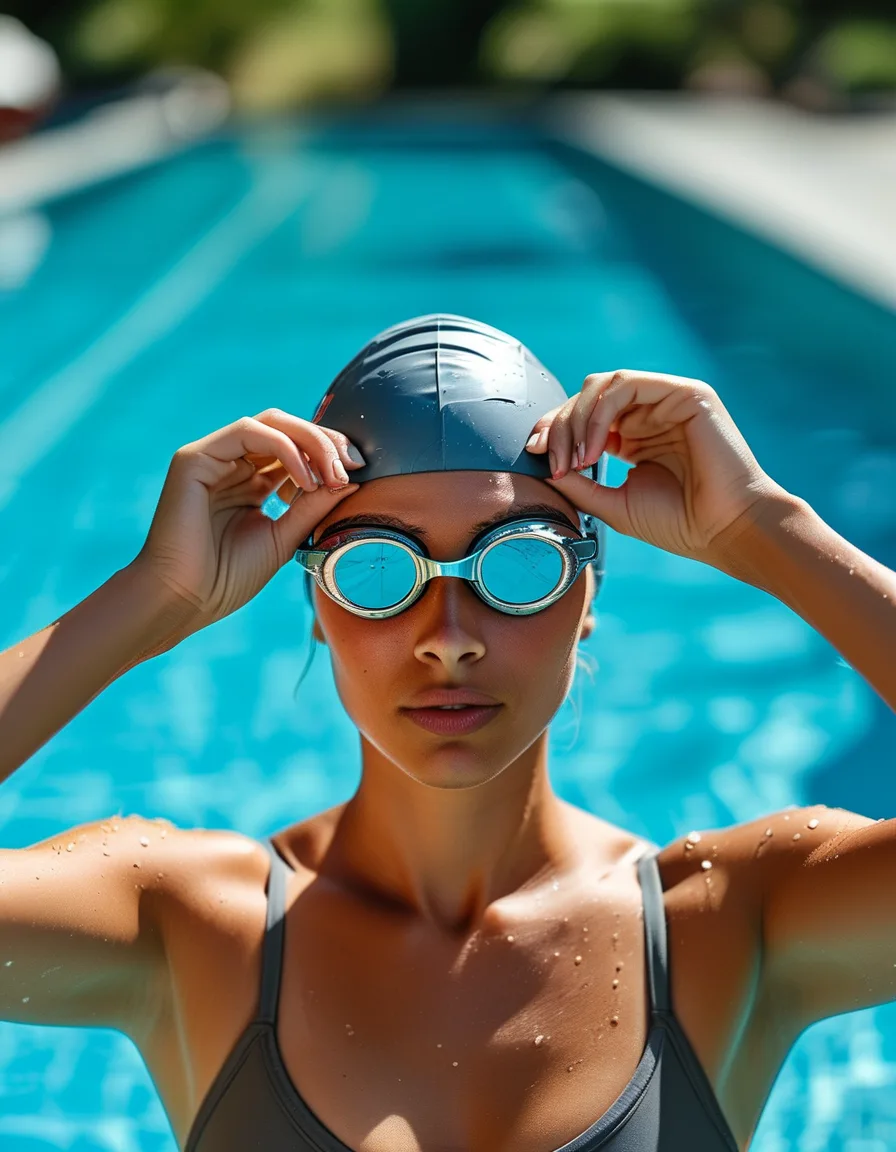
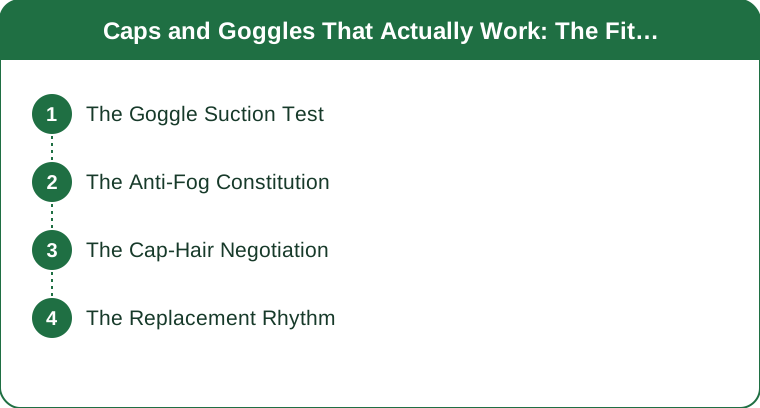
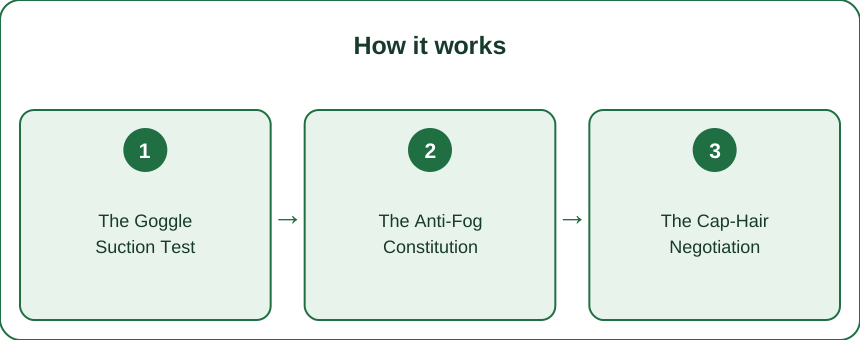
The in-store fit test: press goggles onto eyes WITHOUT the strap — good-fitting cups suction and hold for a second or two on their own (the strap holds them in place; the seal does the sealing). Face shapes vary; goggle lines vary with them — the leaking pair isn’t defective, it’s mismatched. Try three shapes; one will suction.
The Anti-Fog Constitution
The coating rules (earbud-guide energy): NEVER touch the inside lens (the finger wipe kills the anti-fog permanently — the number-one goggle crime, worth repeating forever), rinse in fresh water, case always. Revival for the fallen: baby shampoo drop, gentle rinse. And the spit tradition: ancient, functional, personal choice.

The Cap-Hair Negotiation
The long-hair protocol: hair damp and conditioned first (the chlorine guide’s teachings), twisted into a low bun, cap on back-to-front (crown first, then forehead — the two-person stretch for the thick-haired is legal and traditional). Silicone caps stretch and last; latex pulls hair and tests patience. The cap keeps MOST water out — the pre-wet does the actual protecting.
The Replacement Rhythm
Goggles age by seal and coating: leaky-after-months means the silicone hardened (normal — the regular swimmer replaces two-ish pairs yearly), and the spare pair lives in the swim bag by law. Caps last until they tear at the stretch (silicone: seasons; latex: weeks). Twelve dollars of maintained gear is the difference between swimming and negotiating with equipment.
Suction test the goggles, never touch the lens, bun-then-cap in that order, spares in the bag. The cheapest gear was quitting’s biggest cause — and fit was the whole cure.
Keep Reading
This article is for general informational purposes only and is not medical advice. It is not a substitute for professional diagnosis or treatment. Always consult a qualified healthcare provider about your individual situation, especially before making significant changes to your diet or exercise routine.