Swimming Breathing: How to Finally Stop Gasping and Breathe With Rhythm
For most adult swimmers, the thing that turns swimming from exhausting-and-panicky into smooth-and-sustainable is breathing — and it’s the single most-botched part of the stroke. The sunswim guide: why breathing is the barrier, how to breathe with rhythm and how to practice.
The Breathing-Is-the-Barrier Case
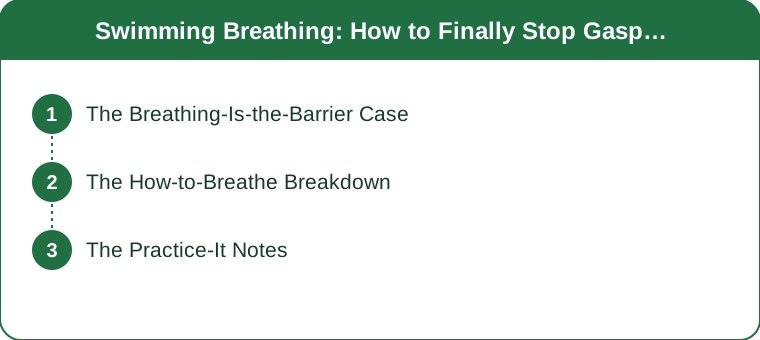
Why breathing makes or breaks swimming: the it’s-the-most-botched-part (the breathing being the most-botched stroke-element from the swimming-technique-beginners chapter — the the-botched; the commonly-wrong), the bad-breathing-causes-panic (the poor-breathing causing gasping-and-panic from the freestyle-swimming-basics chapter — the the-panic; the gasping), the good-breathing-makes-it-sustainable (the rhythmic-breathing making swimming smooth from the swimming-technique-beginners chapter — the the-sustainable; the smooth-and-sustainable), the the-exhale-is-the-key (the the-underwater-exhale being the key from the freestyle-swimming-basics chapter — the the-exhale; the exhale-underwater), and the reframe (the swimming-breathing as the most-botched, panic-or-smoothness-determining, exhale-keyed part).
The How-to-Breathe Breakdown
How to breathe with rhythm: the the-exhale-underwater (the exhaling continuously underwater (the key) from the freestyle-swimming-basics chapter — the the-exhale; the exhale-under), the the-don’t-hold-your-breath (the not-holding-the-breath (causes panic) from the freestyle-swimming-basics chapter — the the-no-holding; the don’t-hold), the the-turn-don’t-lift-the-head (the turning the head to breathe (not lifting) from the freestyle-swimming-basics chapter — the the-turn; the turn-not-lift), the the-breathe-in-the-bow-wave (the breathing in the head’s bow-wave/trough from the swimming-technique-beginners chapter — the the-bow-wave; the the-pocket), the the-rhythmic-timing (the a-rhythmic breathing-pattern (every 2-3 strokes) from the swimming-technique-beginners chapter — the the-rhythm; the rhythmic), the the-bilateral-breathing (the bilateral (both-sides) breathing from the swimming-technique-beginners chapter — the the-bilateral; the both-sides), the the-relaxed-not-rushed (the relaxed, unrushed breathing from the freestyle-swimming-basics chapter — the the-relaxed; the relax), and the the-quick-inhale (the a-quick inhale, long-exhale from the freestyle-swimming-basics chapter — the the-inhale; the quick-in-long-out).
The Practice-It Notes
Practicing swimming breathing: the the-practice-exhaling-underwater (the drilling underwater-exhaling first from the freestyle-swimming-basics chapter — the the-exhale-drill; the drill-the-exhale), the the-bubbles-drill (the a-bubbles/breathing drill at the wall from the swimming-technique-beginners chapter — the the-bubbles; the bubbles-drill), the the-practice-the-turn (the practicing the head-turn from the freestyle-swimming-basics chapter — the the-turn; the practice-turning), the the-rhythmic-practice (the practicing the rhythm slowly from the swimming-technique-beginners chapter — the the-rhythm; the slow-rhythm), the the-relaxed-swimming (the swimming relaxed to breathe-better from the freestyle-swimming-basics chapter — the the-relaxed; the relax), the the-build-up (the building comfort gradually from the swimming-technique-beginners chapter — the the-build; the build-up), the the-full-body-benefit (the swimming’s full-body benefit once breathing-clicks from the swimming-full-body-workout chapter — the the-benefit; the the-payoff), and the frame (swimming-breathing as exhale-underwater-turn-and-rhythmic-timing, drilled-with-bubbles-and-relaxed — stop gasping and breathe with rhythm. Breathe with rhythm swimming — exhale continuously underwater (the key), don’t hold your breath, turn (don’t lift) your head to breathe in the bow-wave, and use a rhythmic pattern (every 2-3 strokes), relaxed — drilled with underwater-exhaling and bubbles: finally stop gasping and breathe with rhythm.
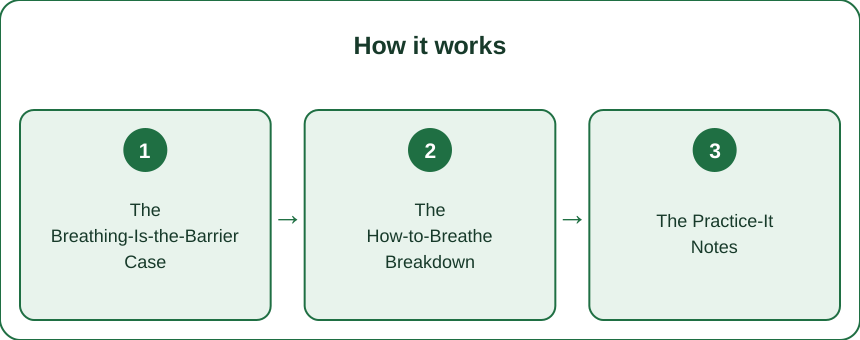
For most adult swimmers, the thing that turns swimming from exhausting-and-panicky into smooth-and-sustainable is breathing — the single most-botched part of the stroke. How to breathe with rhythm: exhale continuously underwater (the key — don’t hold your breath), turn (don’t lift) your head to breathe in the bow-wave, use a rhythmic pattern (every 2-3 strokes), try bilateral breathing, and stay relaxed (quick inhale, long exhale). Practice it — drill underwater exhaling and bubbles at the wall, practice the head-turn and the rhythm slowly, and build up. Finally stop gasping and breathe with rhythm.
Keep Reading
This article is for general informational purposes only and is not medical advice. It is not a substitute for professional diagnosis or treatment. Always consult a qualified healthcare provider about your individual situation, especially before making significant changes to your diet or exercise routine.